Search the Community
Showing results for 'Quick Launch Keyboard'.
Found 1785 results
-
 Asaviour posted a topic in Kaspersky Safe KidsThere seems to be some issues with Kaspersky Safe Kids 23.0.0.418 and Fortnite - Which both my kids play regularly. When launching the game it will hang and then leave me no choice but to restart the computer (can't even open task manager). Even when disabling Kaspersky Safe Kids this issue still persists. Only when I fully un-install the application does the game work again. I can replicate this by then installing Safe Kids again which will produce the crash on launch. I can only assume Safe Kids is trying to capture what is happening when the anti-cheat or the game itself is loading - I don't even have app monitoring on. I've dabbled with quite a few of the settings and still can't get it working. I would like the peace of mind knowing safe kids is installed but at the moment it's unusable due to this fact (I can't even pause it - The program has to be totally un-installed) - I have tried a full re-install which doesn't help - I even did a fresh install of Windows 11 trying to cure the issues until I pinpointed it to Safe Kids. Can you offer any advice? I'd be happy to grab logs if that's possible.
-
 Hi, @Carlos O 71 You should use the EN keyboard layout. Only this keyboard layout is supported in this form. You can use on-screen keyboard if hardware keyboard does not contain EN layout. Thank you for feedback, in upcoming product update we will automatically notify the users about supported keyboard layout. Thanks!
-
 Pandas replied to Pandas's topic in Kaspersky Total Securitythank you for the quick response but sorry i think i might have incorrectly descibed about the issue i can launch steam or epic games but it doesn't have an internet connection. it says it cant reach the servers but after disabling it it can. the website of steam do work fine just the app doesn't so it doesn't let me launch games either
-
 Hello @i_salazar, Welcome! As a test, with (our) KTS set at Default settings, we ran two Quick scans, one after the other, the KTS Scan report images shows the result; noting, we made no changes between running the two scans . Quick Scan. Scans objects that are loaded when the operating system starts as well as system memory, boot files & temporary Internet files . This scan does not require a lot of time to complete → Some of these are dynamic, e.g. temporary Internet files, i.e. change all the time. Do not be concerned, if the scan result is clean the system is fine. Best practice tips: After installing KTS: Run a manual Database update. Shutdown, power OFF system using Shutdown, not Restart, power on., login. Make sure KTS is running. Check version & patch(x) x = letter - on the Windows Taskbar, or hidden icons, rightclick the Kaspersky icon, select About ? (Always try to have the software on the latest available patch). Check & make sure all Windows updates have a Successfully applied status. Run a Full scan, allow it to complete - do not use the computer while it's running - this is a one time scan - unless, at a later date there's a virus or malware attack that requires a full scan. After the Full scan completes, and assuming no detections, go to Quick scan, if you wish you may run a Quick scan or simply change the following setting: Scan optimization, Scan only new and changed files. We also suggest changing the same setting in the Full scan, but, only after, running the very first Full scan. Enable KSN. (ioo) After the *first* full scan, only run a full scan if a *situation* requires it. Run a Quick scan monthly. Keep KSN running always. 💥Important icons in the Scan Window: Top righthand corner: ? opens Help documentation specific to Scanning the computer, || ? = Help documentation, in all Kaspersky software. Gear⚙ icon: opens Settings Report📄 icon: opens Reports. Reports window: top right hand corner, SAVE function, can save any report as a text file (always a big help if submitting a topic here in the Community) Left hand side column, lists 16 KTS Reports, column can be collapsed. Middle section: Filter by date. Filter by value in any cell. Search by event record text. Sort the list by each report column. Change the order and arrangement of columns that are displayed in the report. Middle section, IF screen printing, & (you) wish to hide sensitive info, rightclick the column heading, uncheck the column that needs to be hidden. Report event importance levels are used in reports: Informational events that generally do not contain important information. Warnings. Events that you need to pay attention to, since they contain information about important situations that KTS encounters when running. Critical events. Critically important events that indicate that KTS has encountered problems affecting its ability to run or vulnerabilities affecting the protection level of the user's computer. Any questions, please post back? Thank you🙏 Flood🐳+🐋
-
 hamishp replied to hamishp's topic in Virus and Ransomware related questionsHI, thanks for your speedy reply. I managed to find the file in the quarantine and was quick to delete it. I have also updated my Kaspersky software (thanks for the heads-up, wouldn't have known to otherwise) did another scan after all your advice and it read safe so I am very relieved. Thanks again so much and I'm just happy Kaspersky itself dealt with the malware so fantastically. My confidence in the software has only been bolstered after this.
-
 hugop replied to hugop's topic in Kaspersky FreeHello Berny, In the past i tested this version you suggested me to download but i had some problems with onscreen keyboard, and the issue was i can't put some accents on some fields from my Home Banking! My last name as an accent and my user name needs this accent to work. I asked some help in the topic bellow. "My onscreen keyboard doesn't work on my bank site i can't fill the user and password using onscreen keyboard." And the conclusion was i had to get back to previous version Kaspersky security cloud free because there was no European version available at that time! That's the reason why i asked if you know something. Best regards. Hugop
-
 Melmerby posted a topic in Kaspersky: Basic, Standard, Plus, PremiumHi all I cannot get Kaspersky Premium to run as when I click on the icon to run it I get a page with the message that the subscription is blocked, however in "My Kaspersky" it is showing the license is still active with 235 days remaining and all 5 devices linked. I first noticed this yesterday when I tried logging on to my bank and it wouldn't because "Safe Money" couldn't run. That's when I clicked on the Icon to go to the settings. I can't find anything pertaining to this after a quick search. Any suggestions? Cheers Keith Windows 10 all up to date
-
Hello @Tom Wong, Welcome! Read before you create a new topic! Unfortunately, Kaspersky’s On-screen/virtual keyboard cannot be disabled, there’s no option available in the software to disable the OSKB. According to Kaspersky experts, Kaspersky technical support agent & Kaspersky technical support Supervisor, this is as per by design. If when (you) open Kaspersky’s On-screen/virtual keyboard, the laptop/PC physical keyboard is disabled for input, please log a case with Kaspersky Technical Support, fill in the Application malfunction, Other template; support may request Logs, Traces & other data, they will guide you: After submitting the case, you’ll receive an automated email with an INC+12digits reference number, then, normally, within 5 business days, a Kaspersky Technical Support human will be in touch, also by email, you may continue to engage with the Kaspersky Technical Team via email or by updating the INC in their MyKaspersky account.➡ Please share the outcome with the Community when it’s available? Thank you🙏 Flood🐳+🐋 Resources: About On-Screen Keyboard On-Screen Keyboard About protection of personal data on the Internet
-
Hello @Tizio Cajo, You're most welcome! Thank you for the additional question! Additional to our previous, READ: System Watcher settings, specifically Action to perform if malicious or other activity can be rolled back. In Performance Settings PC performance optimization, make sure Launch Kaspersky at computer startup (recommended) is *checked* IF Kaspersky is not working / running / active, in Windows security there will be alerts & the Kaspersky icon will not be present in Windows *Hidden icons* Another tip, sometimes, finding Kaspersky features in the GUI, can be a little difficult - use the SEARCH field & a simple word search: Thank you? Flood?+?


-
MisslinkQn posted a topic in Virus and Ransomware related questionsI got a notification around 2.55pm today (20 Nov 2024) from Kaspersky saying malicious object detected: HEUR:Trojan.Multi.Misslink.a I clicked on it too clickly and was not able to check what the detection item actually was, to diagnose where it came from. Here are the 3 logs for disinfection: How or what can I check or use to determine the source of this registry key that was so threatening? I want to know what malicious launch activity it was doing while disguising itself with Run:Steam.
-
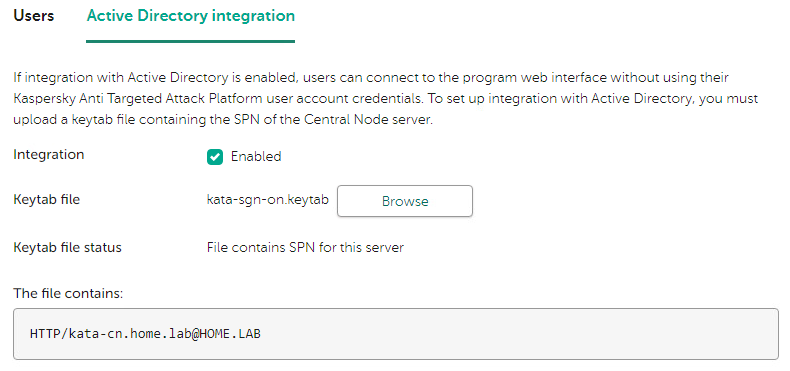
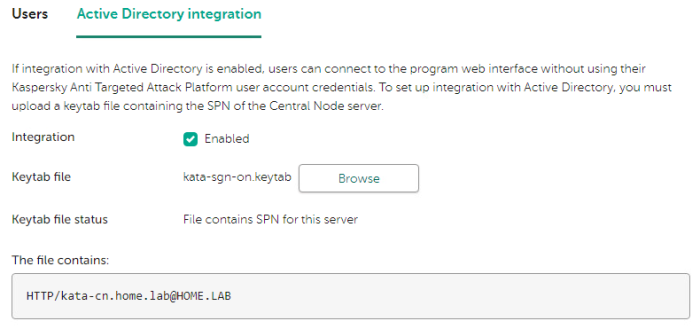
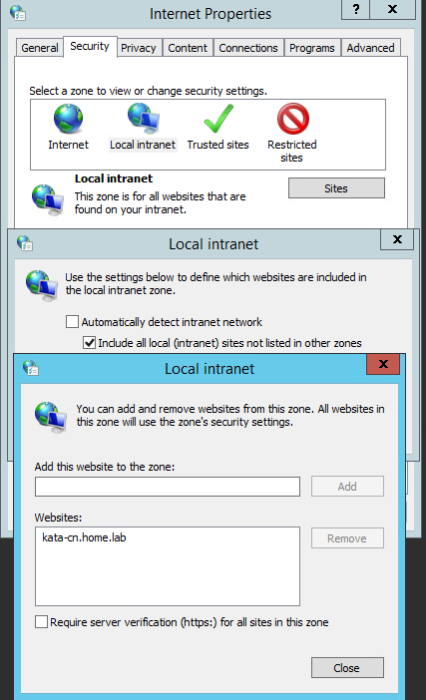
 Antipova Anna posted a topic in Advice and solutions for Kaspersky Anti Targeted Attack & EDR ExpertAdvice and Solutions (Forum Knowledgebase) Disclaimer. Read before using materials. There is an example of a step-by-step instruction to configure Single-Sign-On (SSO) for KATA 4.1/5+/6+ into HOME.LAB domain. Prerequisites Deployed Central Node Server Name should be FQDN. (In current case FQDN name of Central Node - kata-cn.home.lab) It can be checked via Settings/Network Settings of Central Node. A and PTR record should be set for Central Node in DNS. Domain User Account should be created to set up Kerberos authentication by means of keytab file (in current case Domain User Account is kata-sign-on). AES256-SHA1 encryption algorithm should be enabled into created Domain User Account. Step-by-step guide to create keytab file On Domain Controller: Launch CMD As Administrator Execute the following command to create keytab file C:\Windows\system32\ktpass.exe -princ HTTP/kata-cn.home.lab@HOME.LAB -mapuser kata-sing-on@HOME.LAB -crypto AES256-SHA1 -ptype KRB5_NT_PRINCIPAL -pass * +dumpsalt -out C:\TEMP\kata-sgn-on.keytab The utility requests the kata-sign-on user password when executing the command. The SPN of the selected server is added to the created keytab file. The generated salt is displayed on the screen: Hashing password with salt "<hash value>" For multiple Central Node servers you need to save "<hash value>" of hashing password to add an SPN for each subsequent Central Node servers further using ktpass.exe utility. On Central Node Web Interface Move to Settings/Users/Active Directory Integration Add the created keytab file: Keytab file status section contains File which contains SPN for this server The file contains section HTTP/*****@*****.tld Under Users tab click Add and select Domain user account. Set domain user as <username>@<domain> On client machine Host should be joined to the same domain. Domain user should be logged in with account added into the Central Node. Open Control Panel/Internet Options Click on Security and select Local Intranet Click on Sites and then on Advanced Add FQDN of central node - kata-cn.home.lab Close windows: Launch Web Browser and access to Web Interface of the Central Node https://kata-cn.home.lab:8443 and it should be opened without asking any Login/Password.

-
Antipova Anna posted a topic in Advice and solutions for Kaspersky Endpoint Security for BusinessAdvice and Solutions (Forum Knowledgebase) Disclaimer. Read before using materials. This instruction is relevant only in case of troubleshooting incorrect loading or rendering of a web page. In order to troubleshoot issues KES network traffic related issues traffic dump is required. It is easier to analyze and does not require third-party software installation. If reproduction of the issue requires the web browser to open web pages(such as web control non-working as expected, web page not loading, and so on), the tests should be performed in Incognito mode(also known as private browsing). Chrome browser: Ctrl+Shift+N or you can start browser from terminal: & "C:\Program Files (x86)\Google\Chrome\Application\chrome.exe" -incognito . Starting application from terminal will make launch key visible in traces and make diagnostic easier. Firefox browser: Ctrl+Shift+P or you can start browser from terminal: & "C:\Program Files\Mozilla Firefox\firefox.exe" -private-window . Starting application from terminal will make launch key visible in traces and make diagnostic easier. Microsoft Edge: Ctrl+Shift+P Opera browser: Ctrl+Shift+N KES11/12 Instructions Disable KES11/12 Self-defense Navigate to the following registry key: x86: HKLM\SOFTWARE\KasperskyLab\protected\KES<Build version>\environment\ x64: HKLM\SOFTWARE\Wow6432Node\KasperskyLab\protected\KES<Build version>\environment\ Create a string type value named DumpNetworkTraffic : DumpNetworkTraffic = (REG_SZ)"1" Restart the product or reboot the host Traffic dump files will be saved to %ProgramData%\Kaspersky Lab\KES<Build version>\Data\traffic Once the issue is reproduced compress the whole traffic directory Do not forget to disable traffic dump collection. To do so delete DumpNetworkTraffic value.Then restart the product or reboot the host.
-
 The Evolution of Cybersecurity: A Look at Emerging Threats and Solutions In today’s interconnected digital world, the cybersecurity landscape is in a constant state of flux. As technology evolves, so do the tactics and tools of malicious actors. At Kaspersky, Threat Research teams are at the forefront of identifying and combating these emerging challenges, offering insights that help individuals and organizations stay ahead of the curve. Here’s a deep dive into the latest trends and how businesses can bolster their defenses against the threats of tomorrow. 1. The Rise of AI-Driven Cyberattacks Artificial Intelligence (AI) is no longer just a tool for defenders; cybercriminals are leveraging it to automate attacks, develop polymorphic malware, and evade traditional detection mechanisms. AI-powered tools are being used to: Create highly personalized phishing campaigns using real-time data. Generate malware capable of adapting its code to bypass security solutions. Launch Distributed Denial of Service (DDoS) attacks with unprecedented precision. What You Can Do: Adopt AI-powered cybersecurity solutions that can analyze patterns and adapt defenses dynamically. Behavioral analysis tools, such as Kaspersky Endpoint Detection and Response (EDR), are crucial in detecting anomalous activities early. 2. Supply Chain Attacks on the Rise Supply chain attacks continue to grow in complexity. Attackers target third-party software providers or infrastructure to infiltrate larger organizations. Recent studies by Kaspersky Threat Research indicate a 30% increase in such incidents in 2024 alone. Key Examples: Compromising trusted software updates (e.g., the SolarWinds incident). Infiltrating critical cloud service providers to gain broader access. Defense Strategy: Regularly audit the cybersecurity practices of your third-party vendors. Use solutions like Kaspersky Endpoint Security for Business, which monitors software behavior across your network to flag suspicious activities. 3. Cybercriminals Target IoT Devices The Internet of Things (IoT) is becoming a favorite target for attackers due to weak security configurations and inconsistent patching. In 2024, over 1 billion IoT devices were exposed to vulnerabilities like default passwords or outdated firmware. Common Targets Include: Smart home devices (e.g., cameras, thermostats). Industrial IoT (IIoT) used in manufacturing and logistics. Mitigation Tips: Segment your network to isolate IoT devices from critical systems. Use secure gateways or hardware that integrates with IoT security platforms like Kaspersky IoT Secure Gateway. 4. The Weaponization of Generative AI Generative AI tools like ChatGPT and MidJourney are now being used by cybercriminals to automate social engineering. These tools can create convincing phishing emails, fake news articles, and even fraudulent documents in seconds. Recent Trends: Kaspersky researchers uncovered phishing kits leveraging AI to mimic corporate branding with near-perfect accuracy, leading to a significant uptick in Business Email Compromise (BEC) scams. Countermeasure: Educate employees about identifying phishing attempts. Combine training with email security solutions that use AI to spot malicious content in real-time. 5. Quantum Computing: A Double-Edged Sword While quantum computing holds promise for breakthroughs in cryptography, it also poses a significant risk. Quantum machines can potentially break traditional encryption algorithms, threatening the security of sensitive data. Future-Proofing Your Data: Transition to quantum-resistant encryption algorithms. Stay informed about the latest standards, such as those from the National Institute of Standards and Technology (NIST). 6. Zero-Day Exploits and Vulnerability Markets Zero-day exploits remain a lucrative market for attackers. These are vulnerabilities unknown to the vendor, allowing attackers to exploit systems without detection. In 2024, Kaspersky researchers identified a new wave of zero-day attacks targeting critical infrastructure. How to Protect Your Systems: Implement multi-layered security solutions, including virtual patching. Regularly update software and firmware across all devices. Conclusion: Staying Resilient in a Dynamic Threat Landscape The cybersecurity battlefield is shifting rapidly, but the tools and strategies for defense are evolving as well. Staying informed about emerging threats is the first step toward resilience. Solutions like Kaspersky Threat Intelligence Services and Kaspersky EDR are designed to provide proactive defense capabilities, helping organizations mitigate risks before they escalate. As we move further into 2024-25, a proactive approach to cybersecurity—one that combines robust technology with informed human oversight—will be key to staying ahead of adversaries. Stay secure, stay vigilant.
-
 Sam Black replied to Sam Black's topic in Virus and Ransomware related questionsDear Berny, thank you so much for your help with the website. You made the process so much easier, and I really appreciate your quick and clear support.
-
 kabeda replied to kabeda's topic in Kaspersky: Basic, Standard, Plus, PremiumHi, Thanks for your quick answer. Unfortunately, it doesn't correct my problem. Obviously, I tried once again to disable AV and upload. The problem is still here. I was too quick in my conclusions to think the VA was the culprit.
-
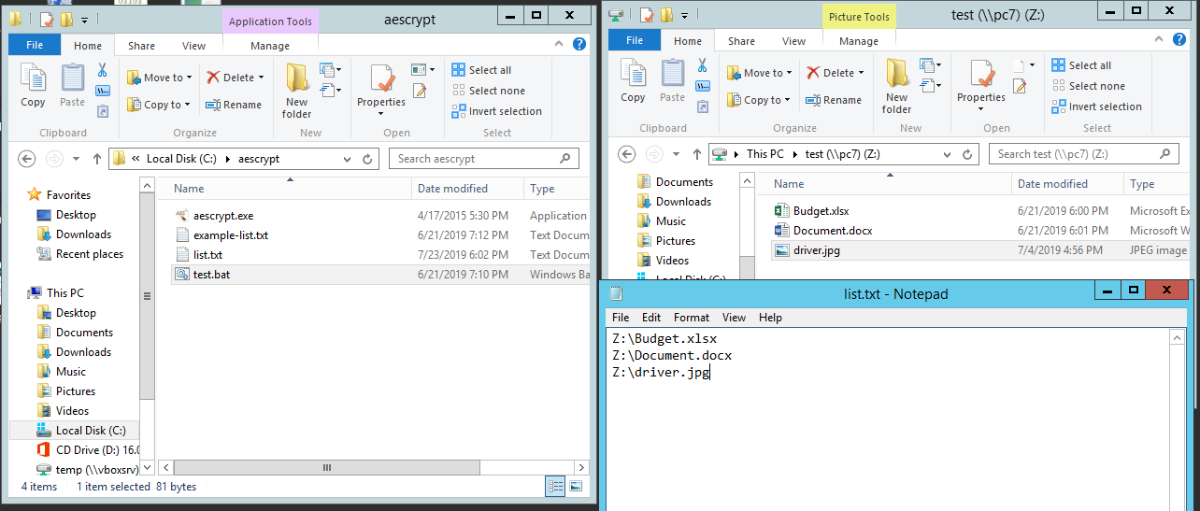
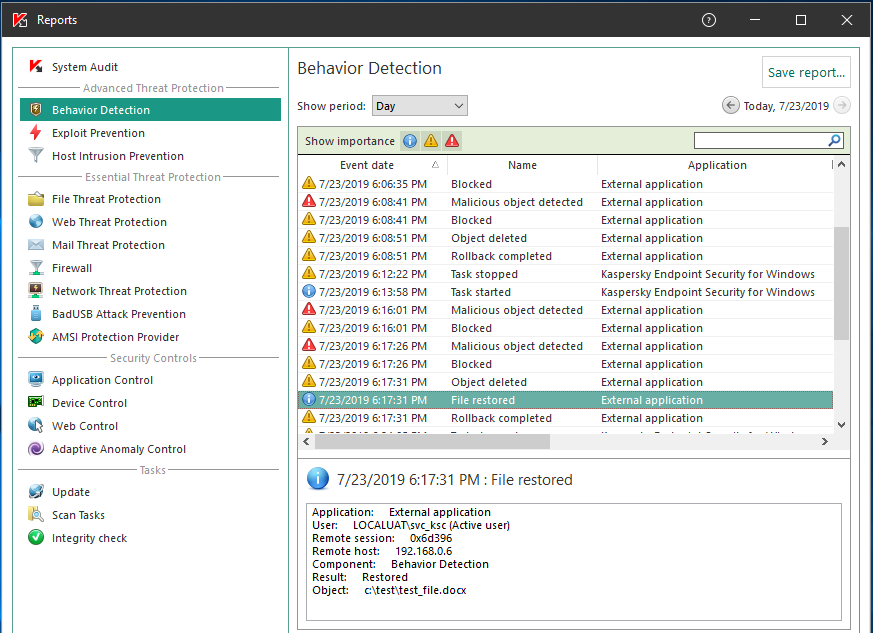
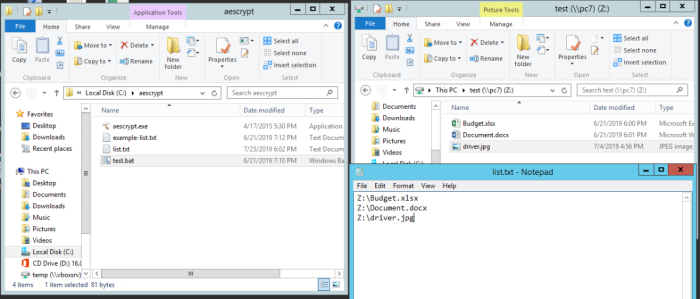
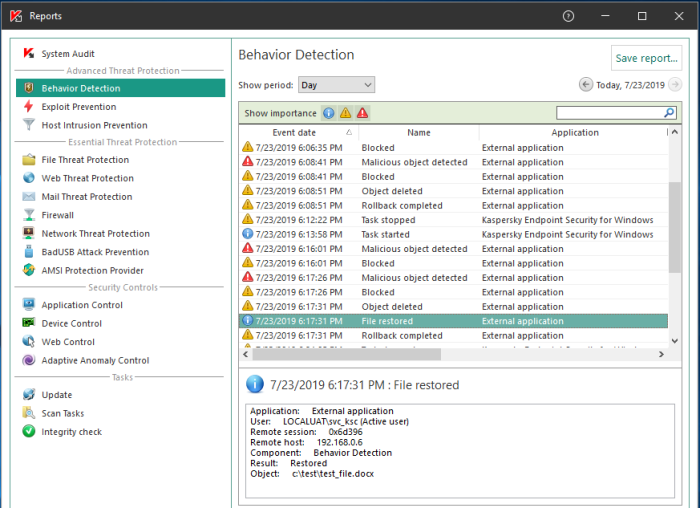
Antipova Anna posted a topic in Advice and solutions for Kaspersky Endpoint Security for BusinessAdvice and Solutions (Forum Knowledgebase) Disclaimer. Read before using materials. This article is about Kaspersky Endpoint Security for Windows (KES for Windows) aescrypt.zip and TestProgExp.zip can be found here. Remote encryption test This test requires two participating workstations: an Attacker PC and a Victim PC. Behavior Detection component has to be configured on a Victim PC to detect malware activity, protect shared folders and block connections on detection of external encryption. Step-by-step guide On a Victim PC create folder with regular office-like files: *.DOC, *.DOCX, *.XLX, *.JPG Share folder on the Victim PC, ensure that the account logged on to the Attacker PC has full access to the shared folder. Map the shared folder as a network drive on the Attacker PC. Add/unpack the aescrypt.zip archive to the Attacker PC. Add contents to the list.txt file, based on the files in a mapped folder. Since the folder is mapped, paths will look like local ones, eg. Z:\Book1.xlsx. Use the contents of file example-list.txt as an example: On an Attacker PC, launch test.bat file to start encrypting files from list.txt . Behavior Detection in KES on the Victim PC will detect the attempt and will try to perform a rollback. Full access to a share on Victim PC for an Attacker PC will be blocked (if specified in KES policy). File restoring event is logged on a protected workstation Access to a folder is blocked from an attacker's point of view Local encryption test Step-by-step guide Prepare a folder with files to get encrypted, perform tests on files *.DOC, *.DOCX, *.XLX, *.JPG. Add/unpack to this folder the attached TestProgExp.zip utility. Launch TestProgExp utility to start the encryption. Files will be encrypted in a folder with test utility Allow some time for Behavior Detection in KES to detect the attempt and perform the rollback, as well as get rid of the suspicious software: Files get restored


-
 cilico posted a topic in Virus and Ransomware related questionsDear Support Team, Please I have my website https://www.cilico.com/ and https://new.cilico.com which does not have a Phishing now. I totally cleaned it but Kaspersky keeps flagging my domain and subdomain as dangerous. This scan shows that no threats were detected in our files, further indicating that these detections are likely false positives. ClamAV Scan Results: However, these domains are still flagged, and our newly developed temporary domain, new.cilico.com, which is scheduled for an upcoming launch, has also been flagged. Kindly reanalyze for me. Help me remove the blacklist. Thank you very much!

-
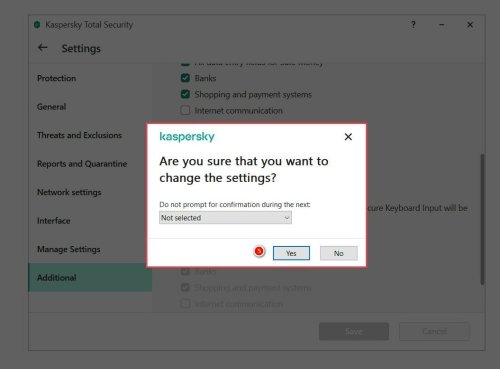
 gameboybin posted a topic in Kaspersky Total SecurityThis has happened with me so many times. It is making me sick. It happens during Teamviewer Remote Sessions. When using Teamviewer or any kind of Remote control. If Kaspersky founds a virus and you need to go select what to do with that virus. The pop up will make your remote control unusable. You cannot use any Keyboard keys or mouse clicks through Remote. It requires you to physically be there on the computer to be able to turn the pop up off Same as on web pages that says the web page might be harmful and you click to move forward, A kaspersky pop up will show up and you cannot use Computer remotely any more because of it Please provide me with a solution. Or fix this issue ASAP! Many Thanks!
-
 SomebodyOx posted a topic in Virus and Ransomware related questionsOk, so a very old, pirated copy of cubase, had its executable detected by kaspersky, as not-a-virus:RiskTool.Win32.DefenderDisabler.k, is detected as a low risk item, there are no other trojans or viruses surrounding it, just the executable of the program that got detected, it did not get flagged under quick scan or real time protection, only in a full scan, it doesnt get deleted or quarantined automatically, I did install it, but I havent ran that program in at least around 5 years, is there any chance it actively puts my system in danger? Its not a keygen, or anything like that, is the actual cubase executable, which seems to be modified as its icon its different than the standart cubase icon, still I had not executed it in years, and windows defender did not detect it in a full scan before a installed kaspersky, should I be worried? I dont think I can upload the file since its more than 500mbs Am running kaspersky 21.20.8.505, in windows 10 pro ver 22h2Am
-
 Largadon replied to Largadon's topic in Kaspersky: Basic, Standard, Plus, PremiumThank you for a quick response. I've suspected this might be one of the possibilities. It infact updated to 21.20 today. Although I agree with @Gb2015 that there could be more controll over app version updates.
-
 Viffergb replied to Viffergb's topic in Kaspersky Total SecurityWindows 10 Version 21H1 (OS Build 19043.1348) Kaspersky Total Security Application Version 21.3.10.391 For several weeks Full Scan on my HP Laptop gets stuck on 1% and trying to take any action results in a complete ‘lock up’ of the p.c. I then have to do a ‘hard reset’ (press power button for several seconds) to turn it off. ‘Do not unpack large compound files’ is set to max. file size of 100MB but it makes no difference. I can successfully run ‘Full Scan’ in ‘Safe Mode’!!! ‘Windows Defender’ Full Scan runs without any issues and I have ‘Acronis Cyber Protect Home Office’ installed, and that also can run a ‘Full Scan’ also without any issues. I have therefore decided to disable my automatic full scan schedule in Kaspersky and use these other scan methods instead until a solution can be found. All other Kaspersky scans run without any issues, e.g. Quick / Vulnerability etc,
-
 For detailed info from Yury N, KL person, please fire up your favorite translator and see: https://forum.kaspersky.com/index.php?/topic/329237-%D0%BF%D0%BE%D0%B8%D1%81%D0%BA-%D1%80%D1%83%D1%82%D0%BA%D0%B8%D1%82%D0%BE%D0%B2/&do=findComment&comment=2501074 Google translate: "1) "Rootkit scan" and "quick scan" are the same. Only "rootkit scan" comes in the background and with reduced CPU and disk consumption. 2) The same number of objects will not get. There are many nuances. For example, running / running processes are included in the scan. Windows constantly runs background tasks, so the number of objects to be scanned is constantly changing. 3) You can do such a test - disable the automatic launch of the rootkit scan, reboot, start the rootkit scan from the console (avp.exe start scan_qscan), wait for the end, start the quick scan. The number of quick scan objects will be greater than that of rootkit scan." And: https://forum.kaspersky.com/index.php?/topic/329237-%D0%BF%D0%BE%D0%B8%D1%81%D0%BA-%D1%80%D1%83%D1%82%D0%BA%D0%B8%D1%82%D0%BE%D0%B2/&do=findComment&comment=2499744 Google translate: "1) The ability to customize the search schedule for rootkits was never. 2) You can disable the search for rootkits in the settings 3) You can set up a "quick scan" schedule convenient for you. Rootkit scan and quick scan are one and the same. Only "rootkit scan" comes in the background and with reduced CPU and disk consumption. 4) You can disable rootkit scan and not set up a quick scan schedule if you regularly launch a quick scan yourself PS The influence of rootkit scan should not be noticeable even when the game profile is disabled. But the game profile affects other background tasks that may be causing the brakes in the game."
-
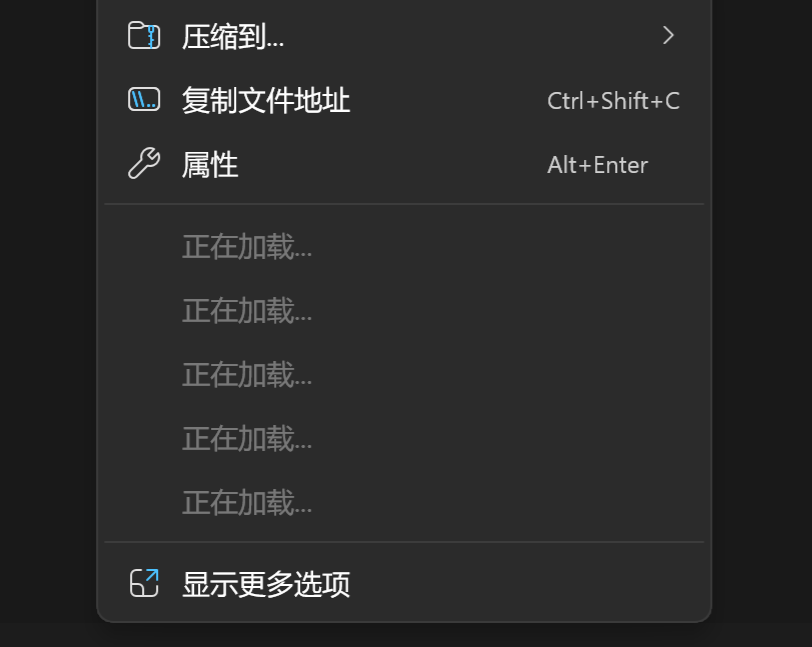
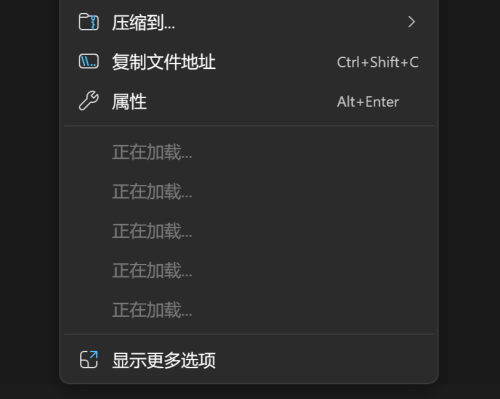
 SimpleName posted a topic in Kaspersky: Basic, Standard, Plus, PremiumMy Windows 11 device is currently suffering from a problem that makes Explorer to launch extremely slowly and making the context menu almost unusable. The symptom looks like Explorer is taking forever to load Kaspersky's context menu. Uninstalling Kaspersky solved the issue and re-installing it can reproduce the problem. The context menu looks like this if Kaspersky is installed ("正在加载..." means Loading...) When trying to show more options, Explorer will become unresponsive and must be killed using Task Manager. If you wait long enough, the context menu will eventually load. The version of Kaspersky Plus is 21.19.7.527(a). I didn't experience this problem before yesterday, and I haven't downloaded/installed any new software during this time. I checked all other context menu entries and tried to uninstall them, but it seems like it's Kaspersky that is causing the issue. Disabling Kaspersky has no effects, it must be uninstalled for Explorer to function properly again. The last Windows Update is on 10/26 and the patch is KB5044384. I've been using Kaspersky for years and never experienced problems like this. But I think I'll just uninstall Kaspersky for my PC to handle my work properly.
-
Also @emrerencber, Check / reset: Keyboard shortcuts? Check: Keyboard shortcuts in apps? Check: Windows keyboard shortcuts for accessibility? Re "I can't navigate the program interface with Tab and Shift Tab keys, I can't hear Kaspersky's system tray settings"; we're not convinced the root cause is Kaspersky?
-
Hello @Leo24 To investigate which process or application loaded this DLL and triggered the error, examining the Windows Event Logs and Process Monitor can be very effective. Here’s a step-by-step guide to help you track down the source of the load error: Step 1: Check the Windows Event Viewer The Event Viewer can reveal system or application errors related to DLL loading issues. Open Event Viewer: Press Win + R, type eventvwr, and press Enter. Navigate to System and Application Logs: In the left pane, expand Windows Logs and select System. Look for Error or Warning events that occurred around the same time as the DLL load error. Similarly, check under Application for any error entries related to DLL loading or system issues. Filter Event Logs: You can filter the logs to make it easier to find specific events. Right-click System or Application logs, select Filter Current Log…, and filter by Event level (select "Error" and "Warning") and the time range you suspect. Look for events with ID 1000 (Application Error) or ID 7000 (Service Control Manager). These may indicate specific errors related to failed DLL loads. Analyze the Event Details: Click on any relevant event and review its General and Details tabs. Note any filenames, process names, or paths related to the load error. Step 2: Use Process Monitor to Track DLL Loads Process Monitor (from Sysinternals) is invaluable for tracking file activity and pinpointing which process tried to load the DLL. Download and Launch Process Monitor: You can download Process Monitor from the Microsoft Sysinternals site. Run it as an administrator for full access to system events. Set a Filter for the DLL File: In Process Monitor, go to Filter > Filter…. Add a filter for Path that contains the name of the DLL (e.g., kernel32.dll). Click Add, then OK to apply the filter. Reproduce the Load Error: Try to reproduce the scenario that triggers the load error if possible. Process Monitor will capture the events related to this DLL. If the load error appears randomly, you can simply let Process Monitor run in the background while observing for the error. Analyze the Process Monitor Logs: Look for entries related to the DLL in question. Check the Process Name and PID (Process ID) to identify which application or service was attempting to load the DLL. Examine the Result and Details columns, especially for any entries marked with Path Not Found, File Not Found, or Access Denied errors. Investigate the Process Details: Once you have identified the process triggering the load error, you can investigate further by: Checking if this process has known issues with dependencies or compatibility on Windows 7. Verifying if updates or reinstallation are available for this application. Step 3: Review System Startup and Autoruns If the DLL load error occurs during startup, it may be linked to startup programs or services. Use Autoruns (Sysinternals Tool): Download and run Autoruns. Go to the Everything tab and search for entries related to the DLL or the process name. Disable any non-essential entries that reference the DLL, restart your computer, and see if the error persists. Summary These tools—Event Viewer, Process Monitor, and Autoruns—can give you a clearer picture of the process triggering the load error. Let me know if you discover any specifics, and I can help further analyze the findings. Thank you